An unexpected revolution: Is AI helping diagnose patients with Cancer?
Artificial intelligence is the hot topic for 2025 despite it being around since the Dartmouth Conference in 1956, where the term ‘artificial intelligence’ was developed by John McCarthy and others to describe the beginning of thinking machines. At its core, it refers to computer systems or machines that are made to mimic human intelligence. AI doesn’t ‘think’ like humans, instead it uses algorithms data and models to make educated predictions or automate tasks.
Despite its early creation, we have seen a real focus this year on AI being used for multiple different reasons. However, although AI gets some negative criticism it has many advantages and can help across multiple sectors including ones that typically no one would except such as health care.
Specifically, AI has been introduced to help search for the cure to some types of cancer. It is helping to adapt the minds of doctors, evolving how they understand, diagnose and treat cancer patients in ways that previously wouldn’t be seen as possible.
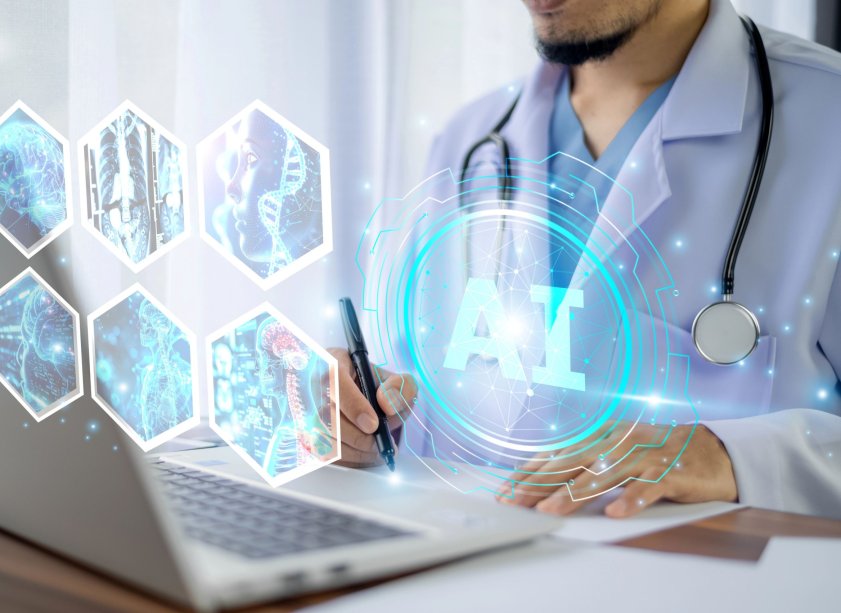
Doctor using AI technology to analyse patients data
How does AI prevent Cancer?
AI doesn’t directly prevent cancer, but in some cases early detection can seriously make the difference between life and death.
In 2023, a study was conducted to explore the possibilities of using AI to predict incidences of pancreatic cancer. Typically, this cancer type is considerably more difficult to detect and more expensive to screen compared to other types.
Therefore, the discovery that AI can be used to aid doctors is a real advantage within the medical sector, especially for patients diagnosed with such life changing diseases. AI used disease codes and the timings of occurrence for millions of patients. Then the model predicted which patients were at a high risk for developing this cancer type. AI was able to generate all this information even though many of the symptoms and disease codes weren’t related to the pancreas.
The possibility of AI is endless, and the fact that it can aid in the prevention of cancer only suggests how capable this technology is, already really established now but inevitably will be even more advanced in the future. Overall, this algorithm generated leads from something that requires a lot of difficult to access genetic testing using millions of data points. Many of these would have been completely overlooked by a human, highlighting this as a breakthrough in medical history.
How does AI help when diagnosing patients?
Group of doctors sat around a table, looking at a screen, showing patients information
The word diagnosis sounds quite complex, however the core fundamental of it is no more complex than simple predictive analytics.
People may be worried using AI to complete tasks like this, however these technologies aren’t replacing human doctors they are models that essentially do what any practitioner would do. This involves; locating information, comparing data, using charts and scans and then making an educated assumption about the information reviewed.
An example of where the use of AI was more effective was when a women had a thyroid lump which didn’t seem to go away. Once examined, a doctor ordered a biopsy- which turned out the lump was benign. Despite this she went to another radiologist to get a second opinion, they came to the same conclusion as the previous doctor however they used AI-driven thyroid ultrasound. If she had gone there initially, she would have avoided the invasive test and the weeks in between of anxiety waiting for the result.
We can all appreciate that the use of AI is a strange concept within health care, however it is clear that it’s on the increase and in many cases can support patients in a quicker, effective and more efficient way.
Close up of robot hand, open palm with a medical cross hologram hovering above it
How does AI provide treatment to Cancer patients?
AI can be used in a variety of ways to treat patients, helping them uncover their disease and then generate an effective next step treatment plan to help mitigate the impact it has on their life. A 2023 study shows that AI can make a huge impact on precision medicine and developing a patients treatment plan.
AI also plays a huge role within research because typically researching and investigating different cancer types isn’t cheap. Therefore, trying to develop a new drug and bring it to the market isn’t easy even though it might be really promising for cancer patients.
Negatives: Limitations & Ethical issues:
Data privacy
Reliability and scalability
Social impact
Overall, it’s clear that AI is emerging everywhere, unexpectedly also within healthcare. It has obviously helped some cancer patients and the more it develops, the more useful it will become.AI is a fantastic tool when used in conjunction with doctors, that can help to take the pressures of and inevitably save more people’s lives in the process.
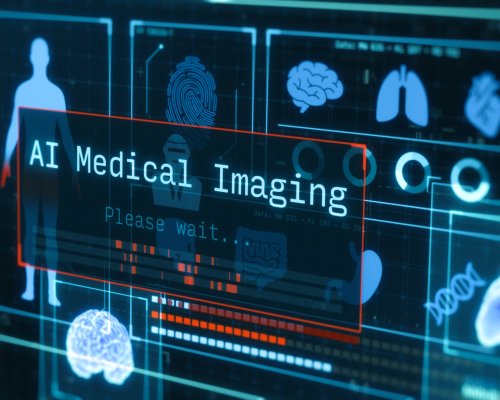
AI used for medical imaging- used for diagnosing patients
Reference: Found information and case studies from https://www.cancerresearch.org/
This website uses cookies to improve your experience. We'll assume you're ok with this, but you can opt-out if you wish. Cookie settingsACCEPT
Privacy & Cookies Policy
Privacy Overview
This website uses cookies to improve your experience while you navigate through the website. Out of these cookies, the cookies that are categorized as necessary are stored on your browser as they are essential for the working of basic functionalities of the website. We also use third-party cookies that help us analyze and understand how you use this website. These cookies will be stored in your browser only with your consent. You also have the option to opt-out of these cookies. But opting out of some of these cookies may have an effect on your browsing experience.
Necessary cookies are absolutely essential for the website to function properly. This category only includes cookies that ensures basic functionalities and security features of the website. These cookies do not store any personal information.
Any cookies that may not be particularly necessary for the website to function and is used specifically to collect user personal data via analytics, ads, other embedded contents are termed as non-necessary cookies. It is mandatory to procure user consent prior to running these cookies on your website.