

The introduction of Awaab’s Law, on October 27, 2025, has changed the landscape for housing providers and maintenance teams across the UK. This law was enforced in the UK due to a boy named Awaab Ishak, the two-year-old who tragically died in 2020 due to prolonged exposure to mould in his home. This horrendous situation, lead to the death of a small child. Therefore, a new law was fought for which now forces landlords to respond to reports of damp and mould within strict timeframes, in hopes that no one else dies at the hands of poor housing maintenance.
Beyond compliance, Awaab’s Law sends a clear message: reactive maintenance is no longer enough. To protect families, housing associations and property managers must embrace a culture of preventative maintenance, to mitigate the risks of this happening to another innocent family. This horrendous tragedy sheds a light on how important preventative maintenance can be, to the point that it can save lives. This step forward, starts by selecting the right tools and technology to help stop a case like this happening again in the future.
Traditionally, many maintenance teams operate reactively. This means only responding when tenants raise an issue or when an asset fails. This approach often leads to:
Under Awaab’s Law, delays can have fatal, legal, financial and reputational consequences. The standard has shifted from “fix it when it breaks” to “prove you’re preventing it from breaking at all.” Not only this, but under Awaab’s law, landlords must investigate and resolve emergency repairs within 24 hours. They must also investigate reports of damp and mould within 10 working days of being notified. Additionally, they are made to make properties safe within 5 working days. This is due to Awaab’s farther repeatedly reporting the unsafe living conditions to the housing association, starting before Awaab was even born, to which they failed to act. They even suggested painting over the mould, implying that the look of the mould was the issue rather than the health effects it was causing. This shift within maintenance strategy, in turn should help to ensure no one else has to suffer as a consequence of delayed repairs or missed appointments due to poor scheduling.
This is where Workforce Management (WFM) software transforms the way maintenance teams operate.
By using a digital platform to schedule, track and analyse maintenance tasks, teams can ensure that every inspection, job and report is logged and actioned on time. For example:
In essence, WFM software turns reactive chaos into proactive control.
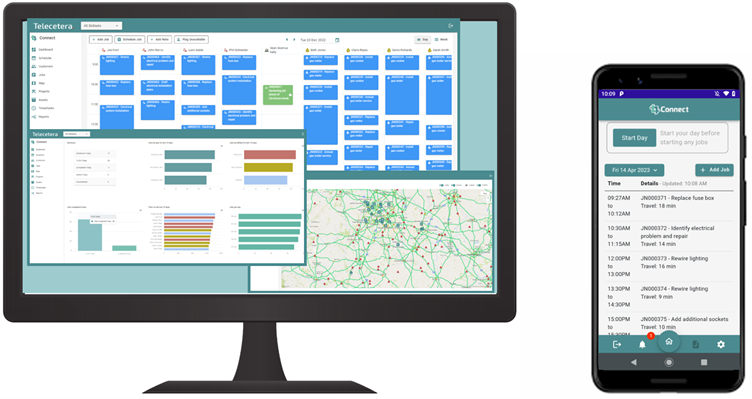
An Example of Connect Manger and Connect Mobile, used to schedule, track and log preventive jobs:
Awaab’s Law isn’t just about legal compliance. It’s about dignity, safety and accountability.
By equipping maintenance teams with modern WFM technology, housing providers can ensure that no family ever faces health effects from preventable housing conditions again.
Proactive maintenance isn’t just smarter – it’s safer, faster and more humane.
Whatever your job is around housing we hope that you undertake preventative maintenance to ensure no one else gets hurt due to neglected maintenance.